


In a world where attention spans are shorter than a goldfish’s, brands need to pull out all the stops to stand out. Enter augmented reality (AR)—the dazzling tech that’s transforming how consumers interact with products. Forget boring ads; with AR branding strategies, brands can create immersive experiences that make customers feel like they’re part of the action.
Imagine trying on a pair of shoes without leaving your couch or visualizing how that funky couch fits into your living room—all thanks to AR. It’s not just a gimmick; it’s a game-changer. As brands embrace this innovative approach, they’re not just selling products; they’re crafting memorable experiences that stick in customers’ minds. Buckle up as we explore how AR can elevate branding strategies and keep consumers coming back for more.
Overview of AR Branding Strategies
AR branding strategies leverage immersive technology to create unique consumer experiences. Engaging with customers through AR applications allows brands to showcase products interactively. For example, virtual try-ons let users see how clothing or accessories fit on themselves, increasing purchase confidence.
Integrating AR into social media platforms expands brand visibility. Users can share their experiences with AR features, generating organic buzz around products. Marketers can utilize AR filters and lenses to encourage user-generated content, significantly enriching brand engagement.
Personalization stands out as a key element of successful AR branding. Consumers respond positively when brands offer tailored AR experiences, such as customizations in car models or home décor visualizations. This individualized approach fosters deeper connections between the brand and the consumer.
Analytics play a crucial role in optimizing AR campaigns. Brands can track user interactions to understand preferences and improve future offerings. Understanding consumer behavior through data-driven insights helps refine AR experiences, ensuring they resonate with target audiences.
Case studies from companies like IKEA and Sephora illustrate the effectiveness of AR strategies. IKEA’s app allows users to visualize furniture in their space, enhancing decision-making and reducing purchase hesitation. Similarly, Sephora’s virtual try-on feature accelerates buying processes by providing immediate visual feedback.
Incorporating AR in marketing not only creates memorable experiences but also builds customer loyalty. Brands that adopt these innovative strategies differentiate themselves in a competitive marketplace. Fostering engagement through AR leads to a stronger brand presence and enhances consumer trust.
Importance of AR in Branding
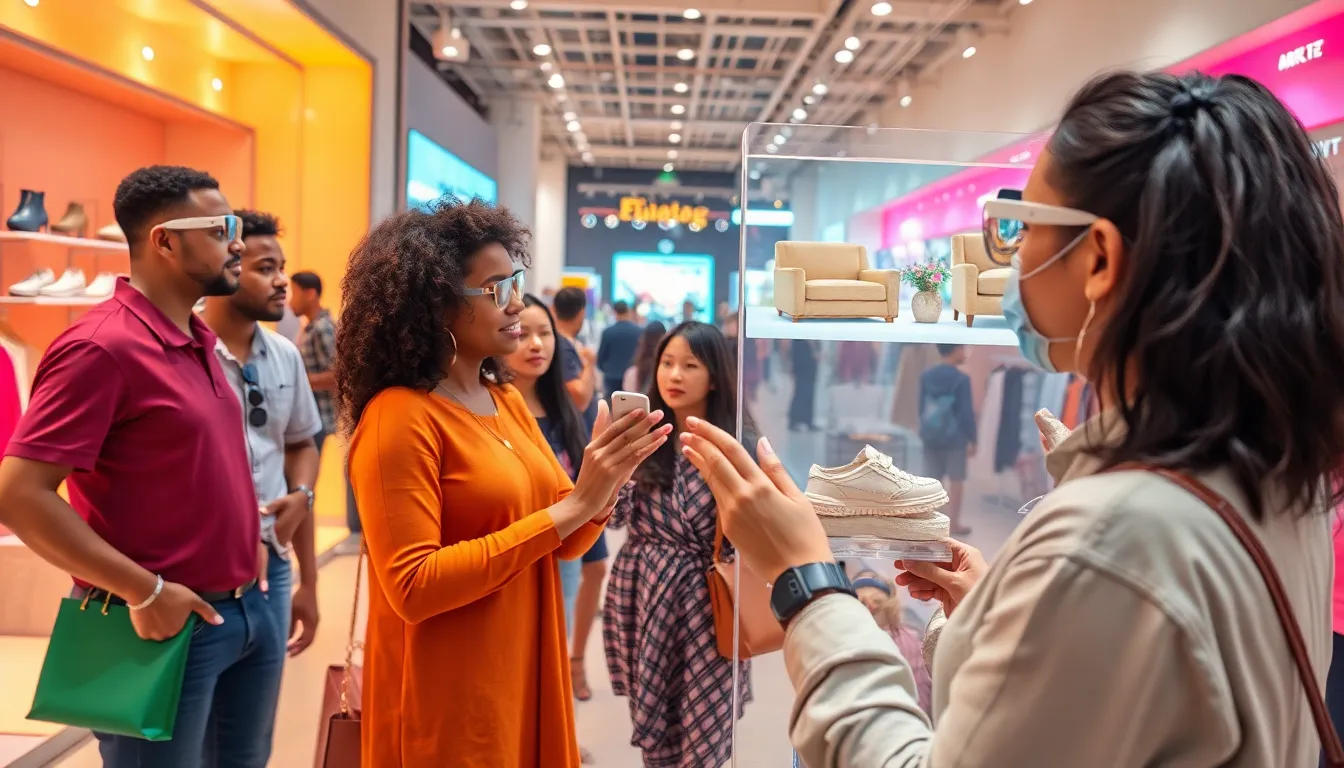
AR transforms branding by creating immersive consumer experiences. This technology enhances customer interactions, elevating brand visibility and loyalty.
Enhancing Customer Engagement
AR stands out by increasing engagement through interactive content. Brands capture attention more effectively with virtual experiences. Users become part of the brand story by interacting with digital overlays. Engagement rates surge when consumers can try products virtually, such as shoes or makeup. Companies report up to 70% improvement in customer interactions with AR features. Engaged consumers often share their experiences online, fostering organic word-of-mouth. This interaction not only builds a community but also cultivates deeper relationships with brands.
Creating Interactive Experiences
Interactive experiences define the essence of AR in branding strategies. Brands leverage AR to invite consumers to engage with products in unique ways. Virtual try-ons make it easier for customers to envision products in their lives. Users experience personal connections as they visualize items like furniture in their homes. With data showing a 30% increase in conversion rates through AR applications, brands gain a competitive edge. Enhanced storytelling engages the audience and makes the brand memorable. Tailored experiences lead to higher retention rates and improved brand perception.
Successful AR Branding Examples
Numerous brands showcase effective AR branding strategies, enhancing consumer engagement and brand loyalty. Innovative use of augmented reality captures attention and transforms how customers interact with products.
Leading Brands Utilizing AR
Sephora integrates AR into its customer experience through its Virtual Artist feature, allowing users to virtually try on makeup. This interactive tool increases user confidence in purchasing decisions. IKEA’s Place app enables customers to visualize furniture in their homes, ensuring products fit both aesthetically and spatially. These leading brands leverage AR technology to create meaningful connections with consumers.
Case Studies in AR Branding
IKEA illustrates successful AR branding by providing a platform for users to see furniture in their own spaces, leading to informed purchases. Sephora has also made significant strides, with their virtual try-on feature accelerating buying processes. These case studies highlight not only how effective AR applications are but also the measurable impact on conversion rates, enhancing customer satisfaction and brand loyalty.
Challenges in Implementing AR Branding Strategies
Augmented reality branding strategies present several challenges. Companies must navigate technology limitations and consumer acceptance issues.
Technology Limitations
Technology limitations hinder the full potential of AR branding strategies. High costs for developing AR applications often restrict small to medium-sized businesses. Limited device compatibility can also prevent users from accessing AR experiences. Not every consumer owns the latest smartphones or AR glasses. Additionally, connectivity issues may disrupt the seamless experience desired. Companies must ensure reliable internet access to prevent frustrating interactions. Integration with existing platforms and software remains a technical challenge. Optimizing AR content for different devices requires significant resources.
Consumer Acceptance
Consumer acceptance significantly impacts the success of AR branding strategies. Many users remain skeptical about adopting new technology. Concerns about privacy and data security deter individuals from engaging with AR applications. A lack of awareness about AR functionalities can limit consumer interest. Educating potential users about the benefits enhances acceptance rates. Familiarity with AR through social media platforms can ease this transition. Brands should focus on creating intuitive and user-friendly experiences to encourage engagement. By addressing these concerns, companies foster a positive perception of AR technology in marketing.
Future Trends in AR Branding
Emerging trends in AR branding indicate a shift towards more personalized experiences. Brands increasingly leverage AI-driven interactions to deliver tailored content based on user preferences. Enhanced AR capabilities are set to make virtual interactions more immersive, creating opportunities for storytelling that aligns closely with consumer lifestyles.
Integration with wearable technology is another significant trend. Smart glasses and AR headsets facilitate seamless engagement, allowing users to interact with brands without the need for mobile devices. This evolution supports hands-free experiences that increase convenience and accessibility.
In social commerce, AR is gaining traction. Platforms like Instagram and Snapchat enable brands to incorporate AR filters and try-on features directly into their advertising strategies. These platforms drive engagement through user-generated content, leading to organic brand exposure. Companies that adopt such interactive methods enhance consumer interaction and encourage sharing, increasing reach.
Analytics continue to play a vital role in shaping future AR strategies. By utilizing data insights, brands can refine AR applications to better align with user expectations. Businesses can track engagement metrics to understand how consumers interact with AR features, optimizing experiences for higher conversion rates.
Sustainability is also becoming significant in AR branding. Brands are exploring eco-friendly AR campaigns that highlight their commitment to environmental responsibility. Through virtual showcases, brands can emphasize transparency and sustainability, fostering connections with environmentally-conscious consumers.
Enhancing virtual reality experiences offers another avenue for growth. AR will increasingly complement VR, creating multi-sensory environments where users can shop and explore. The combination of these technologies promises to transform how consumers perceive and interact with brands, paving the way for innovative marketing approaches.
AR branding strategies are reshaping how brands connect with consumers. By creating immersive experiences that engage and captivate, brands can foster loyalty and enhance visibility in an increasingly competitive landscape. The ability to personalize interactions and utilize analytics for optimization is crucial for maximizing the impact of these strategies.
As technology continues to evolve, brands that embrace AR will likely stay ahead of the curve. They’ll not only meet consumer expectations but also create memorable moments that encourage sharing and community building. The future of branding lies in innovative approaches that leverage AR’s potential to transform consumer experiences and drive lasting connections.


