


Augmented Reality (AR) is rapidly transforming the way people interact with the digital world. As technology advances, AR trends are reshaping industries from gaming to retail, creating immersive experiences that engage users like never before. With its ability to blend the virtual and physical realms, AR is not just a novelty; it’s becoming an essential tool for businesses aiming to enhance customer experiences.
In 2023, several key trends are emerging within the AR landscape. From the rise of AR in e-commerce to innovative applications in education and healthcare, these developments highlight the technology’s versatility. As companies embrace these trends, understanding their implications can help individuals and businesses stay ahead in this dynamic digital era.
Overview of AR Trends
AR technologies are rapidly evolving, influencing various domains. Key trends observed in 2023 include:
- E-Commerce Engagement: AR enhances product visualization. Customers can interact with 3D models, resulting in increased purchase confidence and reduced return rates.
- Educational Tools: AR improves learning experiences. Interactive lessons and virtual simulations bring complex concepts to life, fostering better comprehension and retention.
- Healthcare Innovations: AR aids in medical training and surgery. Surgeons can overlay critical information onto their field of view, improving precision during procedures.
- Real Estate Solutions: AR transforms property viewing. Potential buyers can take virtual tours, allowing them to visualize spaces without physical visits.
- Advertising Strategies: AR delivers immersive ads. Brands create engaging campaigns that captivate audiences, leading to higher brand recall.
- Gaming Experiences: AR games continue to expand. New titles leverage AR for interactive gameplay, enhancing user immersion and satisfaction.
Staying updated on these trends equips individuals and businesses with insights for navigating the dynamic AR landscape effectively.
Emerging Technologies in AR
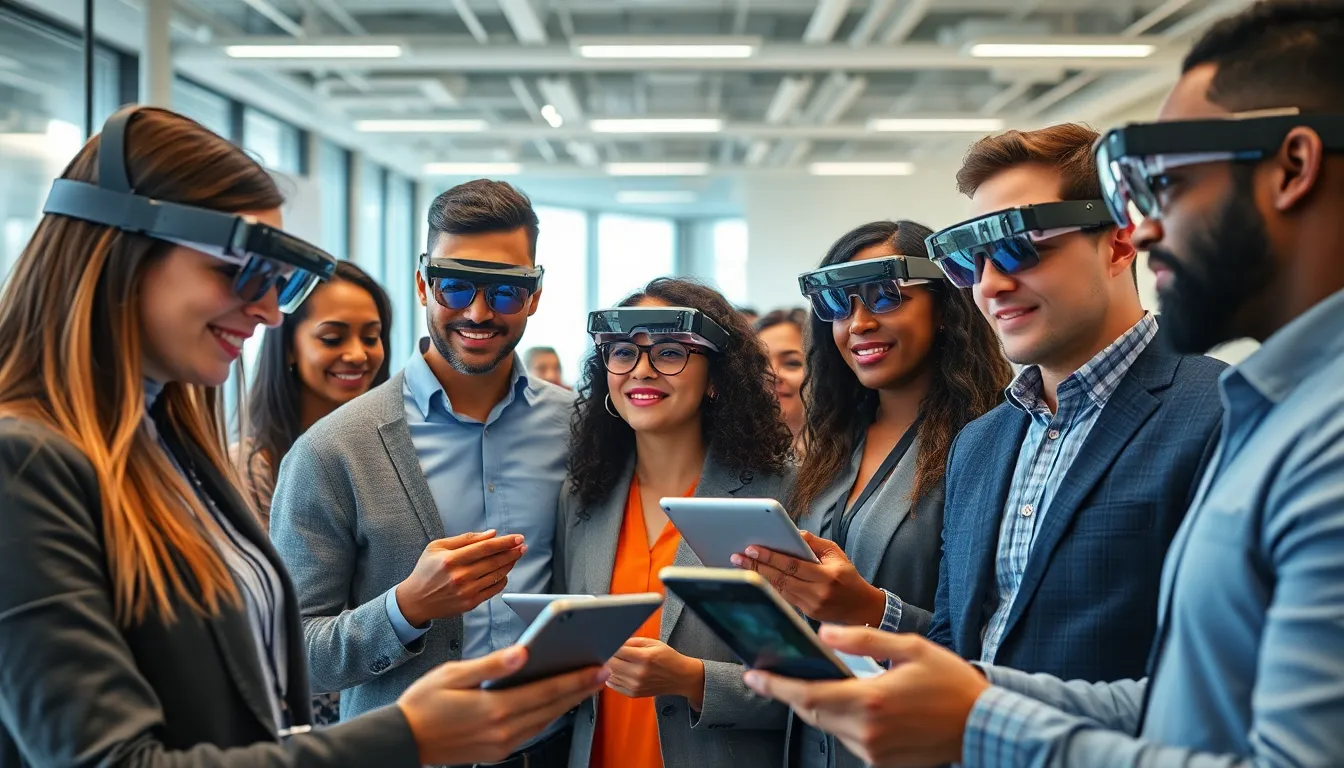
Emerging technologies significantly enhance Augmented Reality (AR) applications, driving innovations across various sectors. These advances include Artificial Intelligence (AI) integration and the deployment of 5G networks, both of which are reshaping the AR landscape.
Artificial Intelligence Integration
AI integration in AR streamlines user interactions. AI algorithms analyze user behavior, providing personalized AR experiences. For example, AI enhances object recognition capabilities in AR applications, allowing users to interact seamlessly with their environment. Machine learning improves AR content creation by automating the design process, which reduces development time and costs. Smart assistants equipped with AR capabilities also offer real-time data overlays, enhancing productivity in industries like manufacturing and maintenance.
5G and Its Impact on AR
5G technology transforms AR by providing faster data transfer and improved connectivity. With 5G, AR applications can deliver high-resolution graphics with minimal latency. This speed allows for real-time interaction in social and gaming environments, enhancing the overall user experience. Additionally, 5G supports cloud processing for AR applications, enabling complex computations without relying heavily on local devices. This capability permits more sophisticated AR experiences in fields such as remote assistance and telemedicine, where high-definition visuals and real-time data access become essential.
Industry Applications of AR
AR significantly impacts various industries by enhancing user experience and operational efficiency. Its applications are expanding rapidly, particularly in retail and healthcare.
AR in Retail
AR enhances shopping experiences by allowing customers to visualize products in their environments. Retailers like IKEA and Lowe’s use AR apps to help customers see how furniture fits in their homes. For instance, AR enables users to place a virtual sofa in their living room, making it easier to select the right size and style. Additionally, AR-driven interactive displays in stores engage customers, providing product information and virtual try-on features for clothing and accessories. This technology not only improves customer satisfaction but also increases conversion rates.
AR in Healthcare
AR revolutionizes healthcare by improving training, diagnostics, and patient care. Medical professionals use AR for surgical simulations, allowing for realistic practice in a controlled environment. For example, surgical teams can overlay critical patient data onto their field of vision during procedures, enhancing precision. AR also aids in medical education, offering students immersive learning experiences through simulations of complex anatomy. Moreover, AR can assist in patient treatment; it enables visualization of medical imaging, helping doctors explain conditions and procedures to patients more effectively. This technology enhances learning and improves patient outcomes substantially.
User Experience and Interaction
User experience and interaction in Augmented Reality (AR) have evolved significantly, focusing on seamless integration and engagement. Enhanced interfaces and personalized experiences create immersive environments that resonate with users.
Enhancements in User Interfaces
Enhancements in user interfaces drive AR applications toward greater accessibility and efficiency. Touchless controls utilize gesture recognition, allowing users to interact without physical contact. Voice commands improve usability, enabling hands-free navigation. Visual clarity enhances user comprehension with intuitive layouts and responsive designs, as exemplified by innovations from companies like Google and Apple.
In addition, context-aware interfaces adapt to user surroundings, providing real-time information tailored to situations. Examples include AR navigation apps that overlay directions on real-world paths, enabling users to find their way without distractions. With these advancements, developers continue to prioritize user-friendly designs, ensuring AR experiences are both engaging and manageable.
Personalization in AR Experiences
Personalization in AR experiences enhances user engagement by tailoring content to individual preferences. Machine learning algorithms analyze user behavior, enabling custom interactions based on usage patterns and interests. For example, AR shopping apps often feature tailored product recommendations, allowing consumers to visualize preferred items in their environments.
Geolocation features further enhance relevance by providing localized content. Businesses leverage this to send targeted promotions or information, increasing customer interaction. By integrating user preferences and contextual data, AR applications foster deeper connections and enhance overall satisfaction, encouraging repeat usage.
Future Outlook of AR Trends
AR technology is set to evolve significantly in the upcoming years. Analysts predict substantial growth in the AR market, with estimated revenues reaching approximately $198 billion by 2025. As integration with AI and machine learning progresses, AR applications will become more sophisticated and user-friendly. Enhanced object recognition and behavioral analysis will drive personalized experiences, making interactions more intuitive.
5G networks are expected to expand AR capabilities further. With ultra-low latency and higher bandwidth, real-time data transfer will improve the quality of AR content. This development will enhance applications in healthcare and remote assistance, facilitating complex procedures and consultations.
In e-commerce, AR’s role in product visualization will continue to gain traction. Retailers will invest in immersive experiences that allow customers to interact with products before purchase. Companies like Sephora and Nike already leverage AR for virtual try-ons, which enhances engagement and reduces return rates.
Education will embrace AR for interactive learning experiences. Institutions are likely to adopt technologies that allow students to visualize complex concepts, making learning more effective. Collaborations between educational tech firms and AR developers will increase, creating a wealth of educational resources.
In the gaming industry, AR will drive new gameplay experiences. Game developers are expected to create more location-based and interactive games that utilize AR to engage players in shared environments. This trend will encourage collaboration and social interaction within gaming, furthering the community aspect.
Advertising strategies will shift towards immersive campaigns that integrate AR. Brands will create interactive ads that immerse consumers in experiences, thereby increasing engagement levels. This approach can lead to higher conversion rates and brand loyalty.
As AR technologies advance, they will significantly impact multiple industries and reshape user experiences. Companies that adopt these trends early will likely gain competitive advantages, positioning themselves as innovators within their sectors.
The future of Augmented Reality is bright as it continues to reshape industries and redefine user experiences. With emerging trends indicating significant growth and innovation AR is set to become an essential tool across sectors. Companies that leverage these advancements will not only enhance customer engagement but also streamline operations and improve outcomes.
As AR technology evolves alongside AI and 5G networks its potential will only expand. Businesses that stay ahead of these trends will position themselves as leaders in their fields. Embracing AR isn’t just an option; it’s a strategic necessity for those looking to thrive in a rapidly changing digital landscape.