


Imagine a world where technicians don’t just fix problems; they do it while wearing cool glasses that overlay digital instructions right on top of the machinery. Welcome to the realm of augmented reality for field services, where tech meets talent in a dazzling dance of efficiency.
Overview of Augmented Reality for Field Services
Augmented reality (AR) revolutionizes field services by providing real-time data and visual guidance. Technicians wearing AR glasses can access digital instructions overlaid onto physical equipment, leading to faster diagnostics and repairs. Real-time information reduces guesswork, helping workers make informed decisions on-site.
Collaboration stands out in AR applications. Remote experts can view the technician’s perspective and provide immediate support, enhancing problem resolution. This connection significantly cuts down on downtime, allowing teams to tackle issues efficiently.
Training benefits from augmented reality also proves transformative. New employees can learn directly from AR overlays, gaining hands-on experience without the risk of damaging equipment. Simultaneously, seasoned technicians reinforce their skills by utilizing AR simulations for complex tasks.
Economic advantages accompany AR deployment in field services. Companies implementing this technology often see increased productivity and reduced operational costs. Studies indicate that businesses adopting AR can achieve a return on investment in less than 12 months.
Despite its benefits, challenges exist. Initial costs for AR technology—including devices and software—may be substantial. Ensuring proper integration with existing systems also requires careful planning and execution.
Overall, augmented reality reshapes the landscape of field services, merging technical expertise with innovative digital solutions. Enhanced efficiency, improved training, and dynamic collaboration demonstrate AR’s significance in this field.
Benefits of Augmented Reality in Field Services
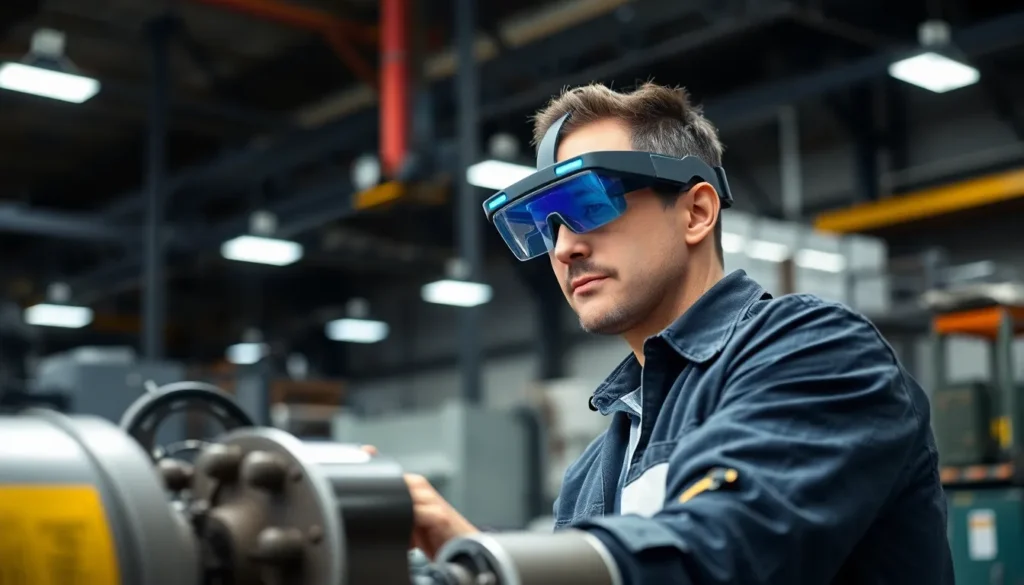
Augmented reality (AR) significantly enhances field services by providing innovative solutions that improve training and support, efficiency, and productivity.
Enhanced Training and Support
Augmented reality transforms training processes for field service technicians. New employees gain hands-on experience through digital overlays that illustrate complex tasks. Experienced personnel benefit from AR simulations that reinforce skills and introduce advanced techniques. Real-time expert guidance becomes possible with AR technology, allowing remote specialists to assist technicians instantly. This immediate support mitigates the learning curve while increasing confidence among less experienced workers. Enhancements in training lead to reduced onboarding times and improved knowledge retention.
Improved Efficiency and Productivity
Efficiency and productivity receive a substantial boost from augmented reality applications in field services. Technicians access digital instructions overlaid on equipment, minimizing time spent searching for information. Faster diagnostics become achievable, resulting in quicker resolutions for equipment issues. Collaboration improves as remote experts can view tasks from a technician’s perspective and provide instant feedback. Thus, the downtime associated with lengthy problem-solving processes reduces significantly. Many organizations report enhanced productivity with AR tools, leading to lower operational costs and higher customer satisfaction.
Applications of Augmented Reality for Field Services
Augmented reality (AR) enhances various aspects of field services, enabling more efficient operations and improving technician capabilities.
Maintenance and Repair
AR facilitates maintenance and repair tasks by providing technicians with real-time digital overlays on equipment. Visual instructions guide workers through complex processes, reducing errors. Technicians find it easier to troubleshoot issues when they can view step-by-step procedures directly on machines. Many organizations report significant decreases in repair time. By using AR, companies often achieve 20-30% faster completion of maintenance tasks, ultimately increasing overall productivity.
Remote Assistance
AR supports remote assistance by allowing experts to collaborate with technicians in the field visually. Technicians can share live video feeds, enabling remote specialists to provide immediate guidance. This support reduces the need for travel, which often costs companies time and money. Field workers receive faster solutions to problems, minimizing equipment downtime. Up to 50% of issues can be resolved during the first call, significantly enhancing customer satisfaction and improving service efficiency.
Equipment Visualization
Equipment visualization transforms how technicians interact with machinery by offering digital schematics and 3D models. Technicians access detailed views of internal components, making it easier to understand systems. When they can visualize complex machinery in AR, they realize better planning and execution of tasks. This capability decreases the chances of missing crucial components during inspections and repairs. Studies indicate that technicians using AR for visualization tasks report a 30% reduction in errors, streamlining operations and fostering safer work environments.
Challenges and Considerations
Adopting augmented reality for field services brings various challenges that must be addressed for effective implementation. Understanding these challenges enhances the potential for successful AR integration.
Technology Adoption
Adoption of AR technology poses challenges for companies. Initial investment costs can deter organizations, especially small businesses. Training employees on new systems requires commitment and time. Resistance to change from technicians accustomed to traditional methods often complicates the transition. Providing clear benefits of AR, such as increased efficiency and reduced training time, is essential for gaining buy-in from staff. Companies that demonstrate positive outcomes, like faster task completion and enhanced collaboration, foster a conducive environment for embracing AR solutions. Overcoming these barriers leads to a more efficient workforce and improved service quality.
Integration with Existing Systems
Integrating AR with existing systems presents significant hurdles. Compatibility issues may arise when trying to align AR tools with current software and hardware. Detailed analysis of systems becomes necessary to ensure seamless integration. Additionally, data management requires careful consideration, as AR applications often depend on real-time information. Ensuring accurate data flow between AR applications and legacy systems boosts operational efficiency. Focusing on scalable solutions allows organizations to adapt AR technologies gradually, minimizing disruptions. By addressing these integration challenges, organizations enhance their field service capabilities and improve overall performance.
Augmented reality is poised to transform field services by enhancing the capabilities of technicians and streamlining operations. With real-time guidance and collaboration, AR not only boosts efficiency but also significantly reduces training times and operational costs. As organizations increasingly adopt this innovative technology, they’ll likely experience improved customer satisfaction and faster issue resolution.
While challenges such as initial investment and integration remain, the benefits of AR far outweigh the hurdles. By embracing augmented reality, companies can position themselves at the forefront of the industry, ready to tackle the complexities of modern field service demands. The future of field services is bright, and AR will play a crucial role in shaping its trajectory.


