
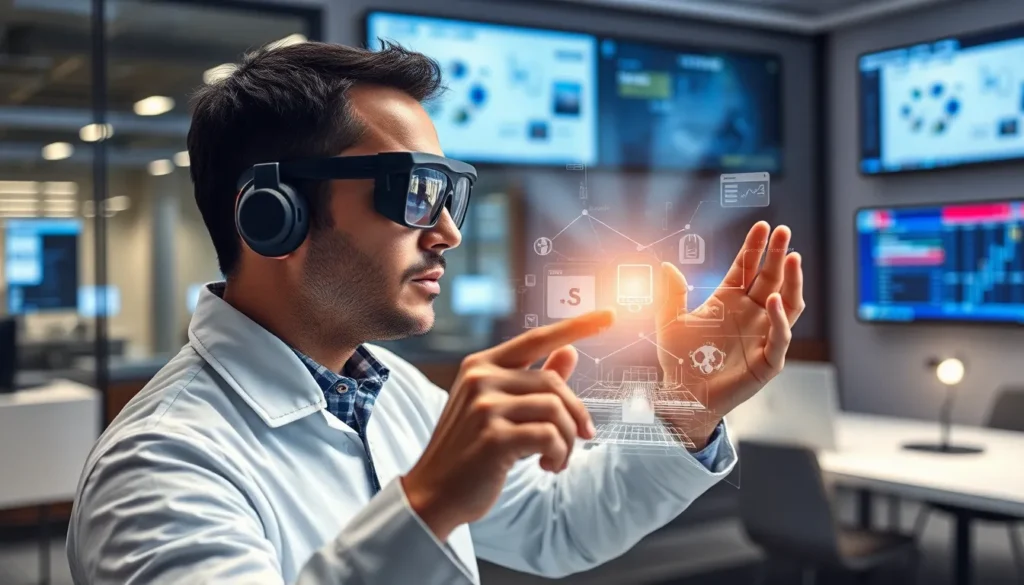

Imagine a world where augmented reality isn’t just a futuristic dream but a seamless part of everyday life. With edge computing stepping in like a superhero in a tech cape, that world is closer than ever. By processing data right where it’s needed—at the edge of the network—AR experiences can become faster, smoother, and way more immersive.
Overview of Edge Computing for AR
Edge computing significantly transforms augmented reality (AR) applications. By processing data at the edge of the network, closer to the user, it reduces latency. This reduction leads to faster response times, enhancing real-time interactions.
Augmented reality relies on extensive data processing for visuals and tracking. Edge computing alleviates the workload on centralized cloud servers. It enables devices to access and process information locally, allowing for smoother experiences in various environments.
Users benefit from reduced lag in AR applications. High-speed data transmission ensures that overlays remain synced with real-world movements. With edge computing, application developers can create immersive experiences that feel instantaneous.
Scalability becomes another advantage with edge computing for AR. As the user base grows, edge solutions can accommodate increased demand seamlessly. Flexibility in resource allocation ensures optimal performance, no matter the number of active users.
Security also improves with edge computing. Sensitive data can be processed locally, minimizing risks associated with transmitting information over the internet. This local processing helps maintain user privacy, a critical aspect of AR applications.
Collaboration between edge computing and AR continues to evolve. Industries such as gaming, retail, and healthcare are already implementing these technologies. By leveraging local data processing, businesses can enhance customer engagement and streamline operations.
Overall, edge computing serves as a cornerstone for advancing augmented reality. The synergy between these technologies promises an elevation in user experiences and a broadening of application possibilities.
Key Benefits of Edge Computing for AR

Edge computing transforms augmented reality experiences by delivering numerous key benefits. Its implementation fosters faster interactions and heightened user satisfaction.
Reduced Latency
Reduced latency significantly enhances AR performance. By processing data closer to the user, edge computing minimizes delays that can disrupt user experiences. When AR devices receive information swiftly, users enjoy seamless overlays synchronized with real-world actions. Real-time interactions become possible, empowering applications to respond immediately to user input. This responsiveness proves essential in fields like gaming and healthcare, where even slight delays can hinder effectiveness.
Improved Bandwidth Efficiency
Improved bandwidth efficiency facilitates optimal data transmission for AR applications. With edge computing, local processing diminishes the demand on cloud infrastructure, allowing devices to handle data-heavy tasks more effectively. As devices offload real-time processing, they conserve bandwidth and enable connectivity for more users. This efficiency encourages broader adoption of AR technologies, especially in crowded environments. High-quality graphics and interactive elements become accessible, resulting in engaging, immersive experiences.
Applications of Edge Computing in AR
Edge computing plays a crucial role in enhancing augmented reality experiences across various industries. By processing data closer to users, applications become more interactive and efficient.
Retail and Marketing
Retailers utilize edge computing to enhance customer experiences with AR. Customers can try on products virtually through AR applications, significantly improving engagement. Local processing eliminates delays, allowing users to see virtual overlays in real-time as they shop. Retailers benefit from more accurate inventory management since edge devices facilitate data updates instantly. Furthermore, targeted marketing campaigns can reach consumers based on real-time analytics, increasing conversion rates.
Healthcare
In healthcare, AR combined with edge computing optimizes procedures and training. Surgeons can access vital patient information through AR displays, reducing reliance on external data sources. Immediate data processing leads to quicker decision-making during surgery, enhancing patient outcomes. AR applications also aid in patient education by displaying information about treatments directly during consultations. With edge computing, sensitive patient data remains secure, thus maintaining privacy while improving healthcare interactions.
Gaming and Entertainment
The gaming industry leverages edge computing to create immersive AR experiences. Players interact with virtual elements seamlessly integrated into their surroundings, reducing lag and enhancing gameplay. Local processing enables complex graphics to render quickly, providing a smoother experience. Gamers enjoy real-time interactions, resulting in engaging multiplayer experiences. Additionally, developers can scale applications to accommodate more players without compromising performance, ensuring widespread accessibility for users within crowded environments.
Challenges and Limitations
While edge computing enhances AR technology, it also presents challenges and limitations that need to be addressed.
Security Concerns
Security is a primary concern in edge computing for AR applications. Sensitive data often processes locally, increasing vulnerability to attacks. Devices connected at the edge can become entry points for unauthorized access, jeopardizing user privacy. Implementing robust security measures is essential to protect personal information. Organizations must prioritize encryption and secure data transmission to mitigate these risks. They also need to establish stringent access controls to prevent unauthorized use of sensitive data in edge computing environments.
Infrastructure Requirements
Infrastructure demands play a significant role in deploying edge computing for AR. The technology requires extensive networks of edge devices, which can be costly and complex. Organizations need to ensure reliable connectivity across various locations. This connectivity is crucial for real-time data processing and seamless user experiences. Additionally, managing a large network of devices adds complexity, necessitating skilled personnel to maintain and optimize systems. Companies should also consider scalability, as increasing user demand for AR applications may require further infrastructure investment.
Future Trends in Edge Computing for AR
Emerging trends in edge computing for augmented reality (AR) focus on enhancing user experiences and streamlining application performance. One key development includes the integration of artificial intelligence (AI) at the edge, enabling real-time data processing for AR applications. Companies leverage AI to analyze user behavior and customize experiences based on individual preferences.
5G technology plays a vital role in advancing edge computing capabilities. As more locations adopt 5G networks, the increased bandwidth and reduced latency empower AR applications. These enhancements support high-quality, immersive environments, crucial for sectors like gaming and remote collaboration.
Scalability also remains a critical focus. With user demand for AR growing, organizations prioritize the development of robust edge networks. Collaborations between tech companies facilitate the deployment of sufficient edge devices, enhancing data processing and improving overall application efficiency.
User privacy concerns drive innovations in security protocols. Organizations seek solutions that secure sensitive data during local processing. Implementing encryption and stringent access controls will be essential in fostering user trust.
Interoperability between devices is an important trend. Devices from various manufacturers need to communicate effectively to ensure seamless AR experiences. Standardization efforts among industry leaders are likely to promote smoother interactions across diverse platforms.
Lastly, the trend toward sustainability in edge computing presents opportunities for environmentally friendly AR solutions. Companies increasingly focus on energy-efficient edge devices while optimizing their infrastructure for minimal environmental impact. By striking a balance between technological advancement and sustainability, organizations can ensure AR applications thrive in a responsible manner.
The partnership between edge computing and augmented reality is reshaping how users interact with digital content. By minimizing latency and enhancing performance, this technology is paving the way for immersive experiences that are becoming integral to various industries.
As organizations continue to explore the potential of edge computing, the focus on security and scalability will be vital for future developments. Innovations in AI and 5G technology promise to elevate AR applications even further, making them more accessible and efficient.
Ultimately, the ongoing evolution of edge computing will not only enhance user experiences but also drive broader adoption of AR solutions, unlocking new possibilities across diverse sectors.


