


In a world where technology seems to leap forward every day, mixed reality and augmented reality are the hottest buzzwords. But what’s the difference? Imagine strapping on a headset and suddenly finding yourself in a dinosaur-infested jungle, or simply seeing a cute puppy sitting on your living room floor. One lets you dive into a whole new world while the other sprinkles a dash of magic onto your reality.
Understanding Mixed Reality Vs Augmented Reality
Mixed reality blends the real and virtual worlds, allowing users to interact with both simultaneously. It creates immersive experiences, such as navigating a digital overlay in a physical environment. Augmented reality enhances everyday life by superimposing digital content onto the real world. It can display information, animations, or 3D models that complement physical surroundings without fully immersing the user.
Mixed reality often requires specialized hardware like Microsoft HoloLens, which tracks the environment and adjusts digital elements accordingly. In contrast, augmented reality typically operates on smartphones, tablets, or smart glasses. AR applications like Pokémon Go illustrate how it integrates digital characters with the user’s reality.
Both technologies serve distinct purposes. Mixed reality often applies to training simulations and design visualization, enhancing practical applications. Augmented reality, meanwhile, excels at entertainment and marketing, providing users with engaging experiences.
For example, in education, mixed reality can simulate complex subjects, allowing students to explore historical events interactively. AR could enhance a science lesson by displaying the solar system’s planets in a student’s classroom.
Ultimately, understanding mixed reality and augmented reality lies in recognizing their unique attributes and uses. Mixed reality offers a deeper level of interaction, while augmented reality enriches the existing environment with digital enhancements. Choosing between them depends on the desired level of immersion and interactivity.
Key Differences Between Mixed Reality And Augmented Reality
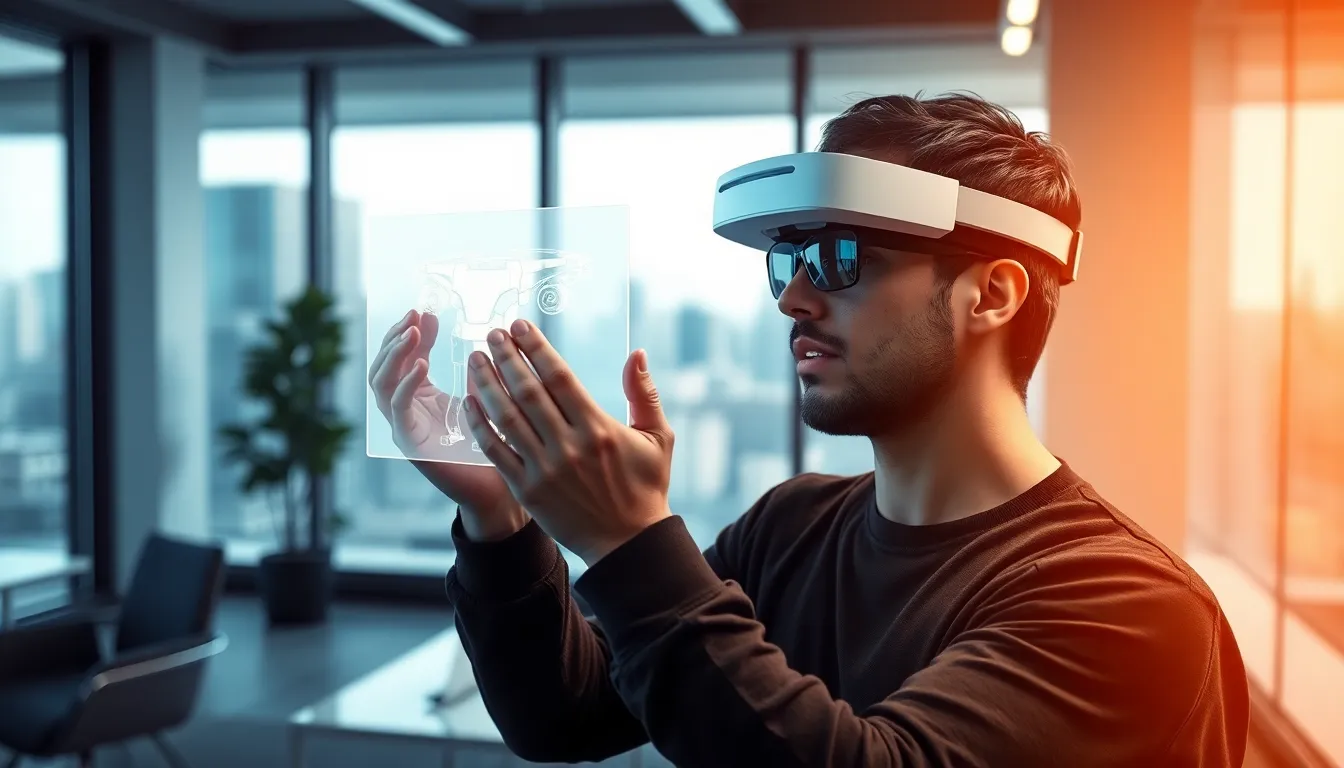
Understanding the unique characteristics of mixed reality and augmented reality highlights their distinct functions and applications.
Definition Of Mixed Reality
Mixed reality combines elements of both virtual reality and augmented reality. Users engage with digital content that interacts seamlessly with the real world. Specialized hardware such as Microsoft HoloLens enhances this experience by creating a hybrid environment. This technology allows for immersive experiences, enabling interaction with virtual objects that occupy the same space as physical ones. For instance, in training simulations, users can manipulate 3D models while receiving real-time feedback. Applications in design visualization allow stakeholders to examine prototypes within their actual surroundings.
Definition Of Augmented Reality
Augmented reality overlays digital information on the physical world, enhancing users’ perceptions of their environment. Most commonly accessed through smartphones and tablets, AR applications integrate digital elements with everyday settings. Popular examples include Pokémon Go and Snapchat filters, which add characters and effects to real-life views. This technology finds significant use in marketing, where brands create interactive campaigns that engage consumers directly. Educational tools, such as apps that display 3D models of historical artifacts, enrich classroom experiences by merging learning with technology.
Applications Of Mixed Reality And Augmented Reality
Mixed reality and augmented reality find extensive applications across various industries. Each technology enhances user experiences in unique ways while fulfilling specific needs.
Industries Utilizing Mixed Reality
Healthcare benefits significantly from mixed reality. Surgeons use it for detailed anatomical visualizations during operations. Training programs leverage mixed reality for realistic simulations, allowing medical professionals to practice procedures before actual surgeries. Manufacturing also adopts this technology. Engineers utilize mixed reality for complex assembly tasks, visualizing parts in situ. The military employs mixed reality in combat training, providing immersive environments for tactical exercises.
Industries Utilizing Augmented Reality
Retail pioneers the use of augmented reality. Customers access virtual try-ons, enhancing shopping experiences while reducing return rates. Real estate uses augmented reality for property viewings, letting potential buyers visualize homes without physical presence. Education embraces augmented reality, enriching lessons by bringing subjects to life. Students interact with 3D models of historical artifacts or scientific phenomena, improving engagement and understanding. Sports enhances fan experiences through augmented reality apps that provide live statistics and player information during games.
Technology Behind Mixed Reality And Augmented Reality
Understanding the technology behind mixed reality and augmented reality reveals distinct hardware and software requirements for each.
Hardware Requirements
Mixed reality relies on advanced hardware such as headsets, like Microsoft HoloLens and Magic Leap, which facilitate three-dimensional interaction. Users benefit from specialized sensors and cameras integrated into these devices, offering depth perception and spatial awareness. On the other hand, augmented reality typically operates on smartphones and tablets equipped with cameras and interpreters. Great examples include devices that support ARKit for Apple and ARCore for Android, allowing seamless integration between digital assets and the real world. Each technology prioritizes immersive experiences while employing different devices tailored to their unique functionalities.
Software Development
Software development in mixed reality involves creating applications that deliver realistic simulations and interactive experiences. Developers utilize platforms like Unity and Unreal Engine, designed to optimize 3D rendering and user interface interactions. Alternatively, building augmented reality applications focuses on integrating digital information with the user’s environment. AR development often employs tools such as Vuforia and ARKit, which simplify tracking and rendering within real-world contexts. Each software development process strives to enhance user engagement and utilizes specific tools suited for its respective technology’s demands.
Future Trends In Mixed Reality And Augmented Reality
Future developments in mixed reality (MR) and augmented reality (AR) promise to revolutionize various sectors. Enhanced immersive experiences will likely emerge as technology advances. Mixed reality applications are expected to generate more sophisticated simulations for healthcare, education, and manufacturing. Enhanced hardware will enable finer three-dimensional interactions.
Augmented reality trends will continue to revolve around mobile graphics and accessibility. Smartphone integration will make AR applications more ubiquitous. Retail environments are adopting virtual try-ons, allowing customers to visualize products before purchase. Meanwhile, education software is set to incorporate interactive 3D models for an enriched learning experience.
Collaboration tools within mixed reality applications might create profound impacts on remote work. Employers could leverage MR for virtual meetings involving 3D data visualization, improving team interaction. Industries such as architecture and design will utilize these capabilities for real-time project updates and modifications.
User-generated content in augmented reality is gaining traction, allowing individuals to create personalized experiences. Social media platforms integrating AR features may enhance user engagement. Users can overlay digital designs on their surroundings for creativity or entertainment, fostering community interaction.
Investment in mixed reality and augmented reality startups is on the rise, signaling a vibrant future. Companies are recognizing the potential benefits of these technologies, leading to innovations in user experience and functionality. As industries explore unique applications, the distinction between MR and AR may evolve, fostering cross-industry partnerships.
Ultimately, ongoing advancements will likely drive growth in both mixed reality and augmented reality, impacting daily interactions and professional practices.
Mixed reality and augmented reality each play vital roles in shaping the future of technology. While mixed reality immerses users in entirely new environments for training and simulations, augmented reality enhances everyday experiences with digital overlays. As industries continue to adopt these technologies, their unique strengths will drive innovation and improve user engagement.
The potential applications are vast and varied, from healthcare to education and beyond. With ongoing advancements and increasing investment, both mixed reality and augmented reality are set to transform how people interact with the world around them. Embracing these technologies will not only enhance experiences but also redefine professional practices across multiple sectors.