


Augmented Reality (AR) headsets are transforming the way people interact with the digital world. These innovative devices blend the physical and virtual realms, offering immersive experiences that enhance everyday life. From gaming to education and professional applications, AR headsets are paving the way for a future where technology seamlessly integrates with reality.
As industries explore the potential of AR, the demand for high-quality headsets is on the rise. With advancements in display technology, tracking systems, and user interfaces, these devices are becoming more accessible and user-friendly. This evolution not only captivates tech enthusiasts but also opens doors for businesses looking to leverage AR for growth and engagement.
Overview of AR Headsets
AR headsets merge digital information with the real world, creating immersive experiences. These devices overlay 3D graphics and information onto the user’s environment, enhancing interaction and engagement.
Key Features of AR Headsets
- Display Technology: Modern AR headsets utilize high-resolution displays to create vivid images. This technology ensures environments appear realistic and engaging.
- Tracking Systems: Advanced tracking systems enable precise real-time interaction with virtual elements. Users experience seamless integration between digital content and their physical surroundings.
- User Interfaces: Intuitive user interfaces facilitate effortless navigation and interaction. Users can manipulate digital objects using voice commands, gestures, or touch.
Applications of AR Headsets
- Gaming: AR headsets enhance gaming experiences by immersing players in interactive environments. Games like “Pokémon GO” exemplify the blend of real-world exploration with digital elements.
- Education: AR headsets revolutionize learning by providing interactive lessons. Educational institutions use these devices to deliver complex concepts in an engaging manner.
- Professional Use: Industries adopt AR headsets for training and collaboration. Medical professionals, for example, use AR to visualize anatomy, improving training outcomes.
Market Trends
AR headset sales continue to rise as technology improves. Reports indicate a projected market growth of over 40% annually over the next five years. Companies prioritize developing lightweight, ergonomic designs to enhance user comfort and accessibility.
Key Features of AR Headsets
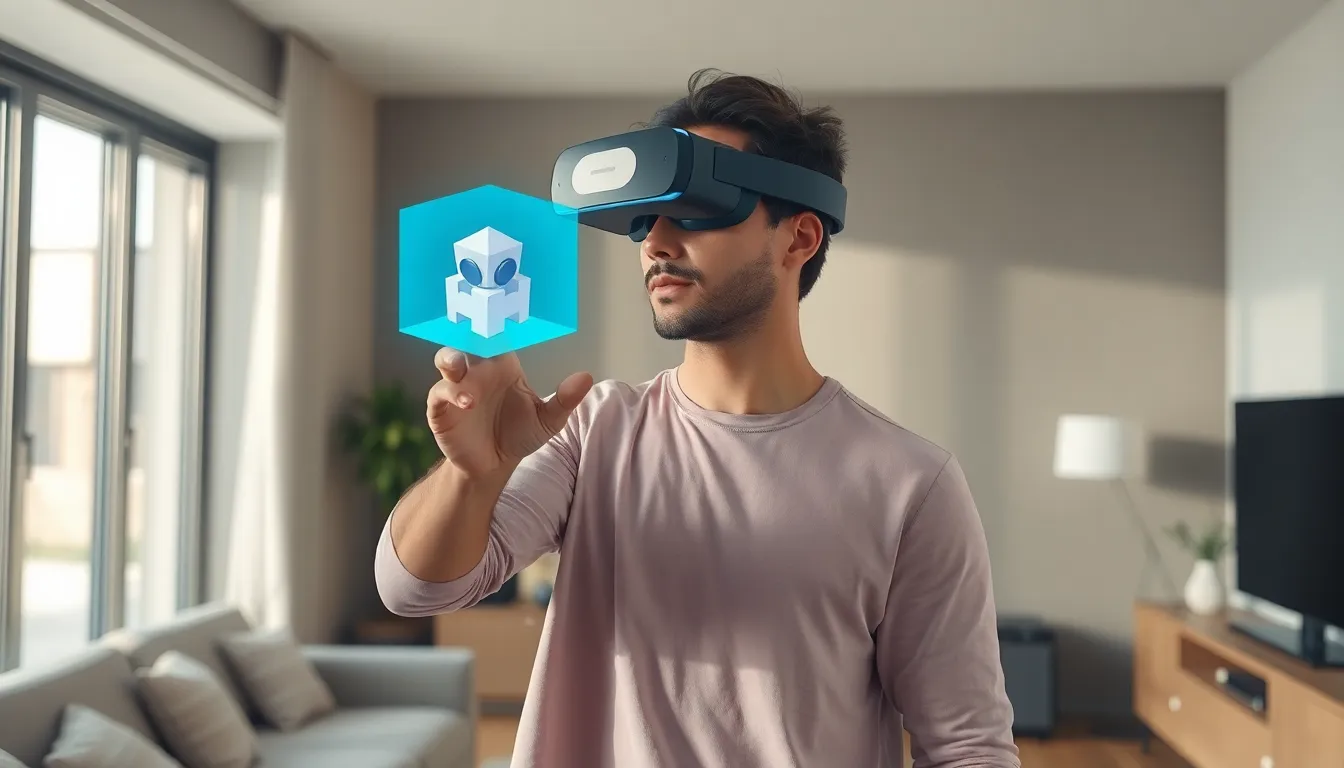
AR headsets incorporate advanced technologies that enhance user engagement in the digital realm. The following features play a crucial role in delivering immersive experiences.
Display Technology
AR headsets utilize high-resolution displays to deliver clear and vibrant images. Technologies such as OLED and microLED provide sharp visuals, enabling detailed overlays on the real world. Diverse pixel densities enhance the viewing experience, ensuring smooth graphics in various lighting conditions. For instance, some models offer resolutions exceeding 2000×2000 pixels per eye, significantly improving clarity.
Field of View
Field of view (FOV) defines the observable area within the headset. A wider FOV contributes to a more immersive experience by allowing users to see large portions of their environment with digital overlays, minimizing the sense of looking through a tunnel. Many leading AR headsets provide an FOV ranging from 90 to 120 degrees, promoting a more natural interaction with augmented elements.
Tracking and Sensors
AR headsets employ advanced tracking systems, including inertial measurement units (IMUs) and external sensors, to accurately map the environment. These systems ensure precise positioning and orientation, allowing users to interact with digital objects seamlessly. Optical tracking methods may utilize cameras to monitor gestures and recognize surroundings. The accuracy of tracking directly impacts user experience, providing real-time feedback essential for applications ranging from gaming to professional training.
Popular AR Headsets on the Market
Several AR headsets dominate the market, each offering unique features that cater to different user needs and industries. Notable options include Microsoft HoloLens and Magic Leap One, which provide innovative solutions for immersive experiences.
Microsoft HoloLens
Microsoft HoloLens is a leading AR headset designed for both enterprise and educational applications. It features a transparent visor that blends digital content with the real world. Key specifications include:
- Display Technology: HoloLens utilizes a high-resolution holographic display that projects 3D holograms in the user’s field of view, delivering vivid details.
- Field of View: It offers a FOV of around 90 degrees, enhancing immersion and interaction with digital objects.
- Tracking and Sensors: Advanced sensors, including a built-in depth sensor and IR cameras, support precise spatial mapping and gesture recognition.
- Processing Power: The device uses a custom chip, the Holographic Processing Unit (HPU), which optimizes coding and enhances performance for real-time applications.
Industries such as construction, healthcare, and manufacturing benefit from HoloLens by using it for training, remote assistance, and collaboration.
Magic Leap One
Magic Leap One is designed to create interactive experiences by blending digital 3D content with the physical world. This headset is aimed primarily at developers and businesses looking to innovate. Key features include:
- Display Technology: It incorporates a photonic chip, allowing for high-resolution visuals and realistic depth perception.
- Field of View: The FOV measures approximately 50 degrees, which provides a focused and immersive experience.
- User Interaction: Users can interact with digital objects using hand gestures, voice commands, and controls, enhancing user engagement.
- Ergonomics: The headset features a lightweight design, improving comfort during extended use.
Magic Leap One finds applications across sectors such as gaming, entertainment, and enterprise solutions, helping to create unique storytelling experiences and interactive training modules.
Applications of AR Headsets
AR headsets enable transformative experiences across various sectors, enhancing interactions in gaming, education, and professional environments. Their applications leverage advanced features to provide immersive solutions tailored to specific user needs.
Gaming and Entertainment
Gaming benefits significantly from AR headsets, offering immersive environments that interact with real-world settings. Developers create augmented experiences that blend virtual characters with physical spaces, heightening engagement. Popular titles for AR headsets include “Pokémon GO,” where users capture virtual creatures in their surroundings. Multiplayer experiences allow users to play together in the same physical space while interacting with digital elements. The integration of social features contributes to a sense of community, elevating the overall entertainment value.
Education and Training
Education experiences a revolution with AR headsets. Teachers utilize these devices for interactive lessons, making complex subjects more tangible. For example, AR can visualize scientific concepts through 3D models, aiding understanding in subjects like biology and chemistry. Training programs in various fields, such as healthcare and automotive, incorporate AR simulations to provide hands-on experience without real-world risks. These applications enhance retention and comprehension, making learning more effective and engaging.
Industrial and Commercial Use
Industries like construction, healthcare, and manufacturing utilize AR headsets for enhanced efficiency and safety. In construction, workers access blueprints and project data in real-time, allowing for immediate adjustments on-site. Healthcare professionals use AR for surgical assistance, overlaying critical information during procedures to improve accuracy. Furthermore, AR simplifies maintenance and repair processes, enabling technicians to visualize components and receive step-by-step instructions. As businesses continue to adopt these technologies, productivity and collaboration enhance significantly.
Challenges and Limitations of AR Headsets
AR headsets face several challenges and limitations that affect their widespread adoption and usability.
Technical Limitations
- Processing Power: Current AR headsets require significant processing power to render graphics and maintain smooth performance. Limited on-device processing results in reduced functionality.
- Battery Life: Battery life poses challenges, with most AR headsets offering a limited usage time. Users often need to recharge frequently during extended use.
- Field of View Constraints: The field of view remains an issue, with many headsets providing a restricted experience compared to full peripheral vision. This limitation can hinder immersion.
User Experience Challenges
- Comfort Issues: Many AR headsets exhibit weight distribution problems, causing discomfort during extended use. Ergonomic design improvements could enhance user satisfaction.
- User Adaptation: Users may require time to adapt to using AR interfaces, impacting initial engagement levels. Training may be necessary for effective interaction.
- Accessibility: Accessibility for individuals with disabilities presents challenges. Features that accommodate diverse user needs remain insufficient in current models.
Development Constraints
- Content Creation: AR content creation requires specialized skills, leading to a shortage of readily available applications. Developers may need time and resources to create high-quality content.
- Cost Barriers: High development and production costs hinder affordability, particularly for consumers. Many businesses may find it challenging to justify investments in AR technology.
- Integration Challenges: Integrating AR technology with existing systems can be complex. Companies often struggle to implement AR solutions seamlessly within their workflows.
Societal Concerns
- Privacy Issues: The use of AR headsets raises privacy concerns regarding data collection and surveillance. Users must be cautious about their personal information.
- Social Acceptance: Social perception of wearing AR headsets in public spaces presents obstacles. Some individuals may feel uncomfortable using the technology in social settings.
- Health Risks: Prolonged use may lead to physical discomfort, visual strain, or headaches. Manufacturers need to address these health concerns through better design and usage guidelines.
These challenges and limitations form barriers to fully realizing the potential of AR headsets. Addressing these concerns is crucial for enhancing user experiences and driving wider adoption across different industries.
Future Trends in AR Headsets
AR headsets are set to evolve significantly, influencing numerous industries. Enhanced functionality will increase their integration into everyday life. Expected advancements include improved display technologies, expanded applications, and more accessible interfaces.
- Display Technologies: AR headsets will incorporate next-generation display technologies such as microOLED and miniLED. These advancements promise brighter colors, deeper contrasts, and overall better visual experiences, exceeding current standards. Users can anticipate resolutions surpassing 4K per eye for unparalleled clarity.
- Artificial Intelligence Integration: Incorporating AI will improve user interaction and personalization. Intelligent systems can analyze user behavior, providing customized content and real-time feedback. This adjustment will create more engaging and efficient experiences across various applications.
- Social Interactivity: AR headsets will emphasize social experiences. Users will engage in virtual environments, participating in live events and collaborative tasks. Improved communication tools will enable seamless interactions, enhancing shared experiences in gaming, education, and business settings.
- Enhanced Tracking Capabilities: Advanced tracking systems will support more robust spatial computing. Through improved sensor fusion and computer vision techniques, AR headsets will accurately map users’ environments, allowing for more realistic placements of digital content.
- Wearable Ergonomics: Future designs will prioritize comfort and usability. Lightweight materials, better weight distribution, and adjustable frameworks will enhance user experience, making prolonged use less taxing. Focus on ergonomic designs will appeal to a broader audience.
- Enterprise Solutions Growth: Industries will increasingly harness AR for productivity and training. AR headsets will serve as critical tools for remote assistance, maintenance, and training simulations. Companies will invest in specialized applications to streamline operations and boost employee engagement.
- Regulatory and Safety Standards: As AR headsets gain traction, regulatory frameworks will emerge. Standardized guidelines concerning health, safety, and data privacy will provide users with confidence in adopting the technology, fostering broader acceptance.
These future trends underscore AR headsets’ transformative potential, facilitating deeper interaction with digital landscapes while addressing current limitations.
The future of AR headsets is bright and full of potential. As technology continues to advance it’s clear that these devices will redefine how people interact with both digital and physical worlds. With increasing adoption across various sectors the benefits of AR headsets are becoming more apparent.
Challenges remain but ongoing innovations in design and functionality are addressing these issues. The integration of AI and improved tracking systems will enhance user experiences making AR headsets more accessible and engaging. As industries embrace this technology the possibilities for growth and collaboration are limitless.
AR headsets are not just a trend; they’re paving the way for a new era of interaction that blends reality with digital enhancements. As the market evolves it’s exciting to think about the transformative experiences that lie ahead.