


Augmented reality (AR) is transforming the way people interact with the digital world, blending virtual elements with real-life environments. As this technology continues to evolve, the demand for effective AR tutorials grows, helping users grasp its potential and applications. From gaming to education and retail, AR opens up new possibilities that enhance experiences and engagement.
In this article, readers will discover a variety of augmented reality tutorials designed to cater to different skill levels. Whether someone is a beginner eager to explore AR basics or an experienced developer looking to refine their skills, these resources provide valuable insights. By diving into the world of AR tutorials, users can unlock the full potential of this groundbreaking technology and create immersive experiences that captivate audiences.
Overview of Augmented Reality Tutorials
Augmented Reality (AR) tutorials provide essential knowledge for users eager to explore this emerging technology. These resources facilitate understanding of AR concepts, tools, and development techniques. Categories of tutorials vary, covering subjects such as application creation, game development, and educational implementations.
Types of Augmented Reality Tutorials
- Beginner Tutorials: Focus on introducing fundamental concepts and basic tools. Users learn about AR’s principles and how to set up their first AR project.
- Intermediate Tutorials: Delve into more complex topics, such as integrating AR with existing applications. Users discover coding practices and software frameworks to enhance their AR projects.
- Advanced Tutorials: Target experienced developers seeking to master specific AR technologies. Users explore sophisticated techniques, such as spatial tracking and interactive content design.
Essential Tools for Augmented Reality Development
- AR Development Platforms: Include popular frameworks like ARKit and ARCore, which provide robust environments for developing AR applications.
- 3D Modeling Software: Users familiarize themselves with tools like Blender or Maya, crucial for creating 3D assets used in AR experiences.
- Programming Languages: Users encounter languages such as JavaScript and C#, which are vital for scripting AR behaviors and interactions.
Popular Resources for Augmented Reality Tutorials
- Online Courses: Platforms like Coursera and Udemy offer structured courses that guide users through each aspect of AR development.
- YouTube Channels: Channels dedicated to AR programming provide visual demonstrations and step-by-step processes that enhance learning.
- Developer Forums: Sites like Stack Overflow and AR-specific forums allow users to ask questions and share experiences, facilitating community support and knowledge sharing.
These tutorials empower users to fully leverage AR technology and contribute to innovative projects across various industries.
Benefits of Augmented Reality Tutorials
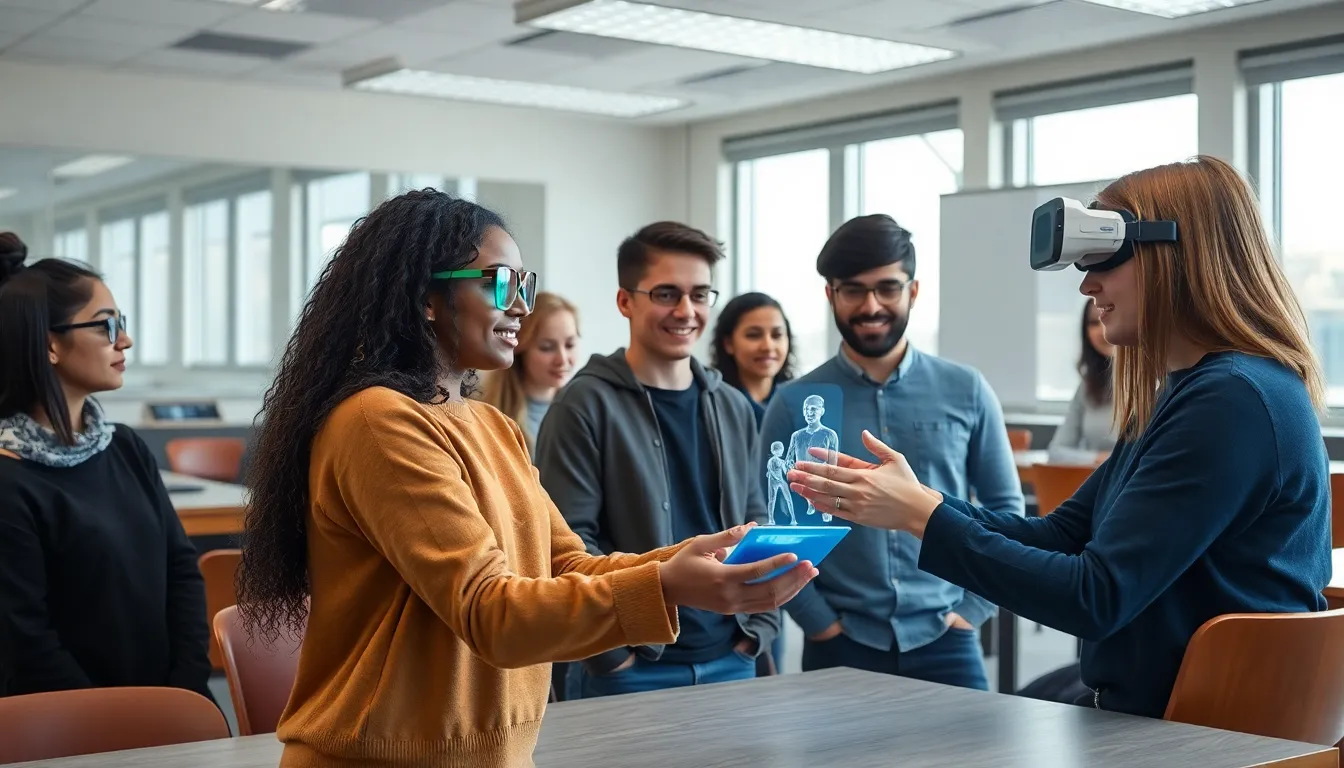
Augmented reality (AR) tutorials provide users with significant advantages in understanding and applying AR technology. These resources enhance learning, engagement, and interactivity across various platforms.
Enhanced Learning Experience
AR tutorials create an immersive learning environment, allowing users to visualize concepts in real-time. Users grasp complex subjects more easily through interactive features, such as 3D models and simulations. Studies indicate that learners retain information better when engaging with visual aids and hands-on activities. Content tailored for different skill levels further supports user progression, ensuring a comprehensive understanding of AR applications.
Engagement and Interactivity
AR tutorials foster a compelling experience through increased engagement. Users participate actively when manipulating virtual elements within their physical surroundings. This interactivity stimulates curiosity and promotes deeper exploration of topics. Moreover, immediate feedback during tutorials aids in skill acquisition, allowing users to refine their techniques more efficiently. Engaging content maximizes user retention, making AR tutorials a valuable investment in learning.
Types of Augmented Reality Tutorials
Augmented reality tutorials come in various forms, catering to different devices and user preferences. Users can choose between mobile apps and desktop applications, each offering unique features and learning experiences.
Mobile Apps
Mobile apps provide accessible AR tutorials directly on smartphones and tablets. Users can engage with immersive experiences through popular applications such as:
- Google Lens: This app allows users to identify objects, translate text, and explore information in real-time using the device’s camera.
- IKEA Place: Users can visualize furniture in their homes, learning how to use AR for interior design.
- Snapchat: Offers a range of AR filters and lenses that teach users how to create interactive content and enhance social media experiences.
Mobile tutorials focus on user-friendly interfaces, enabling quick engagement through hands-on learning. They often incorporate gamification elements, facilitating skill development while maintaining user interest.
Desktop Applications
Desktop applications focus on more comprehensive AR tutorials suitable for advanced development. These applications include:
- Unity: This game engine offers extensive AR capabilities, with tutorials on integrating AR features into games and applications.
- Blender: As a 3D modeling software, Blender teaches users how to create complex models for AR environments, using detailed instructional content.
- Vuforia Studio: Provides frameworks for building AR experiences, with tutorials guiding users through each step of the development process.
Desktop tutorials emphasize complex concepts and robust coding practices, catering to users aiming for professional-level expertise. They typically offer extensive documentation, software development kits, and community support for guided learning.
Popular Augmented Reality Tutorial Platforms
Several platforms offer valuable tutorials for augmented reality, catering to various skill levels and interests. These platforms provide structured pathways for users keen on mastering AR technology.
Platform A
Udacity specializes in AR with a range of courses focused on practical application. Every course combines video lectures, interactive quizzes, and projects that allow users to build real-world AR applications. Beginner-friendly courses introduce foundational concepts, while advanced options cover cutting-edge techniques, such as integrating AR with artificial intelligence. Community support enhances learning by offering mentorship and feedback on projects.
Platform B
Coursera features partnerships with top universities and organizations, providing diverse AR tutorial options. It offers courses designed by industry experts, covering various topics from AR basics to advanced development strategies. Each course includes lectures, peer assessments, and hands-on projects for practical experience. With flexible scheduling, users can learn at their own pace, making it accessible for busy individuals. The certification received after course completion adds value to users’ professional credentials.
Future Trends in Augmented Reality Tutorials
Emerging trends in augmented reality (AR) tutorials indicate significant advancements in user engagement and interactivity. New platforms integrate artificial intelligence (AI) to personalize learning experiences based on user behavior and preferences. These AI-driven tutorials adapt content dynamically, offering tailored guidance that enhances the overall learning process.
Collaboration tools are gaining prominence in AR tutorials. Users can work together in real-time through shared AR environments, facilitating group projects and enhancing collective learning. These tools allow for instant feedback, making the learning experience more interactive and productive.
Cross-platform accessibility continues to evolve. With AR tutorials available on various devices, users can learn from anywhere at any time. This trend promotes inclusivity, ensuring that users with different device preferences can engage with AR content seamlessly.
Gamification of AR tutorials is on the rise. Incorporating game design elements, such as rewards and challenges, pushes users to explore concepts in a fun, engaging manner. This approach enhances motivation and retention, appealing to a wider audience.
Furthermore, the integration of biometric feedback in AR tutorials is becoming prevalent. Sensors can track users’ physical reactions, tailoring lessons to optimize engagement levels. By adjusting the difficulty based on real-time feedback, these tutorials create a personalized learning experience that boosts effectiveness.
Lastly, the rise of community-driven content is shaping the future of AR tutorials. Users can contribute to tutorial creation, sharing unique insights and experiences. This collaborative approach fosters a supportive learning environment, continuously enriching the available AR resources.
As these trends evolve, they underscore the critical role of AR tutorials in educating and empowering users across various industries.
Augmented reality tutorials are paving the way for a more interactive and engaging learning experience. By catering to various skill levels and preferences, these resources empower users to explore the vast potential of AR technology. Whether through mobile apps or desktop applications, learners can find tailored content that enhances their understanding and skill acquisition.
As AR continues to evolve, staying updated with the latest tutorials and trends is crucial for anyone looking to excel in this field. The integration of AI and gamification elements promises to make learning even more effective and enjoyable. Embracing these tools not only fosters creativity but also prepares users to contribute to innovative projects across diverse industries.