
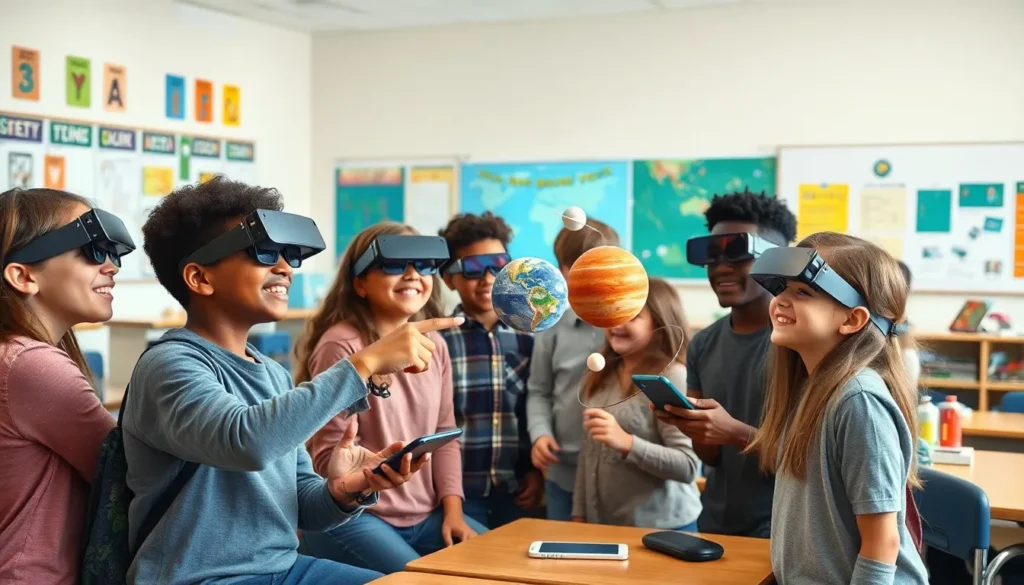

Imagine walking into a classroom where textbooks leap off the page and lessons come alive in vivid detail. Welcome to the world of smart classroom augmented reality (AR), where learning isn’t just a chore but an adventure. With AR technology, students can explore complex concepts in ways that make even the most mundane subjects feel like a blockbuster movie.
Overview of Smart Classroom AR
Smart classroom augmented reality (AR) represents a significant shift in educational technology. This innovative approach enhances traditional learning environments by integrating digital information into the physical world. Students benefit from interactive experiences that deepen understanding of complex subjects.
AR applications bring theoretical concepts to life, allowing for hands-on learning that traditional methods lack. For instance, students studying biology can visualize and interact with 3D models of cellular structures, making abstract ideas tangible. Similarly, history lessons may transform into immersive experiences where students explore historical sites or events in real-time.
Teachers play a vital role in implementing AR in the classroom. They can design engaging lessons that incorporate AR elements, promoting student participation and collaboration. Enhanced engagement often results in higher retention rates, as students find learning more enjoyable and relevant.
Institutions adopting smart classroom AR see improvements in academic performance. A study by the International Society for Technology in Education found that 78% of students felt more motivated in AR-enhanced classes. This technology not only supports various learning styles but also prepares students for future technological advancements.
Furthermore, accessibility remains a key advantage of smart classroom AR. Resources like AR glasses and mobile apps provide students with diverse learning tools. These resources can be adapted for different educational needs, ensuring inclusivity for all learners.
Overall, the integration of smart classroom AR transforms educational experiences, fostering a deeper connection between students and the material studied. As technology advances, further innovations in AR promise to improve and revolutionize classroom interactions.
Benefits of Smart Classroom AR

Smart classroom augmented reality (AR) provides numerous advantages that enhance the learning experience. Each benefit contributes to a more effective educational environment.
Enhanced Learning Experiences
Smart classroom AR simplifies complex subjects through interactive models. Students visualize 3D structures in biology or anatomy, which deepens comprehension. Real-time simulations present historical events, making the content tangible. Customizable AR applications cater to diverse learning styles, ensuring all students can benefit. Teachers leverage this technology to create immersive lessons that foster critical thinking and problem-solving. This hands-on approach transforms passive learning into active exploration, supporting students in retaining knowledge more effectively.
Increased Engagement
Engagement levels soar in AR-enhanced classrooms, as students interact with digital content. Studies indicate that 78% of learners feel more motivated during AR lessons. Collaborative projects encourage teamwork and communication among peers, while competition through AR games motivates students to excel. Educational content becomes entertaining, significantly reducing boredom associated with traditional methods. AR also appeals to varying interests, drawing in students who might struggle with conventional learning. This heightened engagement translates to improved focus and better academic performance across subjects.
Technologies Behind Smart Classroom AR
Smart classroom augmented reality relies on advanced technologies to create enriching educational experiences. Understanding these technologies helps appreciate their impact on learning.
Augmented Reality Tools
Augmented reality tools play a pivotal role in smart classrooms. These tools include AR glasses, mobile devices, and interactive displays, which allow students to interact with digital content seamlessly. For instance, AR glasses provide immersive experiences by overlaying digital images on the real world. Mobile devices also facilitate access to AR apps, enabling students to explore interactive models and simulations. Interactive displays engage entire classrooms, encouraging group participation. Institutions adopting these tools often report higher engagement and motivation levels among students.
Software and Applications
Software and applications designed for smart classroom AR enhance the learning process. These programs enable educators to create custom AR experiences tailored to specific subjects and learning objectives. Moreover, many applications offer features such as 3D modeling, real-time collaboration, and gamified learning experiences. For example, educational apps allow students to explore historical events through interactive timelines or visualize complex scientific processes. By providing diverse functionalities, these applications cater to various learning styles and promote deeper understanding of the material. They ultimately transform traditional classrooms into dynamic learning environments that inspire curiosity and critical thinking.
Implementation Challenges
Implementing smart classroom AR involves navigating various challenges that impact its effectiveness and adoption in educational settings.
Cost Considerations
Costs significantly influence the implementation of smart classroom AR. Schools often face high initial investments for AR technology, including hardware and software purchases. Funding constraints can limit access to advanced AR tools for many institutions. Continuous maintenance and updates for AR systems add ongoing expenses that schools must budget for. Additionally, professional development for educators requires investment to ensure teachers can effectively use AR in their lessons. As a result, institutions frequently seek grants or partnerships to mitigate these financial burdens.
Technical Limitations
Technical limitations pose significant challenges to the successful integration of smart classroom AR. Compatibility issues with existing hardware can hinder the seamless implementation of AR tools in classrooms. Insufficient internet connectivity affects real-time interactivity, impacting the overall user experience. Moreover, educators may encounter difficulties in accessing quality content or resources designed for AR, resulting in a lack of relevant materials for lessons. Frequent software glitches or system malfunctions can disrupt learning activities, causing frustration among students and teachers alike. Institutions must address these technical challenges to optimize the potential benefits of smart classroom AR.
Future of Smart Classroom AR
Emerging trends and innovations in smart classroom augmented reality (AR) shape the future of education. Continuous advancements in AR technology lead to increasingly immersive educational experiences. Companies focus on developing user-friendly applications that integrate seamlessly with existing classroom tools. Customization options for AR content allow educators to tailor lessons to specific learning objectives. Collaborative features in AR applications promote interaction among students, enriching group projects. Enhanced hardware, such as AR glasses and interactive displays, offers more practical solutions, fostering active engagement.
Trends and Innovations
A shift towards mobile AR applications creates significant opportunities for education. The use of virtual and augmented reality headsets expands, enabling more interactive learning experiences. Institutions incorporate gamified learning elements, helping to increase student motivation and retention. Data analytics tools track student engagement within AR environments, providing valuable insights for educators. Additionally, partnerships between educational institutions and tech companies foster the development of innovative AR solutions that cater to diverse learning needs.
Predictions for Adoption
Forecasts suggest a steady increase in AR adoption within educational institutions over the next five years. By 2028, up to 65% of K-12 classrooms may implement AR technology as a standard teaching resource. Enhanced professional development for educators will ensure successful integration of AR into curricula. With growing recognition of AR’s benefits, investment in infrastructure will improve overall access to technology. As AR tools become more accessible and affordable, multiple educational settings will experience transformative changes in teaching and learning.
Smart classroom AR is revolutionizing the way education is delivered. By blending digital content with the physical classroom environment, it creates engaging and interactive learning experiences. This technology not only fosters deeper understanding but also enhances student motivation and collaboration.
As institutions continue to adopt AR tools, they’re likely to see significant improvements in academic performance and student engagement. While challenges exist in implementation, the potential benefits far outweigh the obstacles. With ongoing advancements and a focus on user-friendly applications, smart classroom AR is set to become a cornerstone of modern education, preparing students for a tech-driven future.


